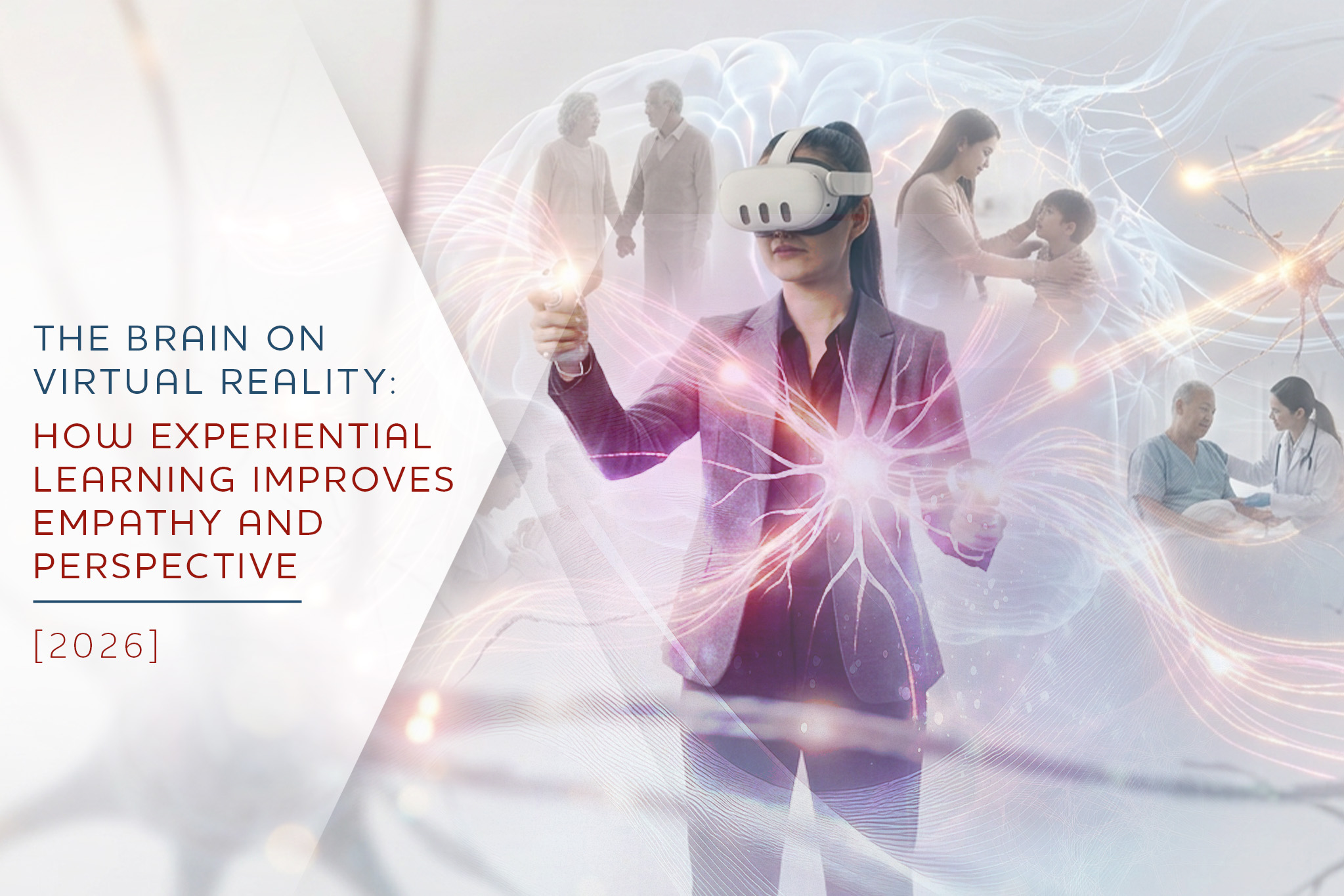
Empathy plays a central role in healthcare, where effective communication between patients and providers directly influences care outcomes. Understanding a patient’s experiences, emotional state, and concerns surrounding diagnosis and treatment helps clinicians build trust and deliver more responsive care. Clinical research has shown that positive patient interactions contribute to improved treatment adherence, higher patient satisfaction, and better health outcomes. Empathy therefore represents a critical component of this communication dynamic, supporting trust, clarity, and patient engagement.1
Despite the importance of empathy in clinical practice, cultivating this capability within healthcare education remains challenging. Medical training traditionally prioritizes scientific knowledge, procedural competence, and clinical decision-making, while emotional understanding often develops gradually through direct patient interaction. Educational approaches such as case discussions, reflective exercises, and standardized patient simulations support cognitive understanding of patient experiences. Emotional perspective-taking, however, can remain difficult when learners rely primarily on description rather than lived experience.
Experiential learning environments introduce a new approach to perspective-taking in healthcare training. Within this technological landscape, eXtended Reality (XR) functions as an umbrella category encompassing Virtual Reality (VR), Augmented Reality (AR), and Mixed Reality (MR). VR generates fully simulated environments, AR overlays digital information onto physical settings, and MR enables interaction between digital objects and real-world environments.
Among these modalities, VR has attracted growing interest within medical education and medtech training. Experiential learning simulations can place participants inside scenarios that reflect patient experiences (such as the one in this demonstration), clinical environments, and treatment journeys.
Research suggests that immersive experiences, like VR, activate brain regions associated with empathy and social cognition, providing a scientific foundation for experiential learning in healthcare.2 By allowing learners to step into a patient’s perspective, immersive technologies offer a powerful new pathway for developing empathy in clinical training.
Neuroscience Foundations of Empathy
Empathy represents a multidimensional psychological process involving emotional resonance, cognitive perspective-taking, and the ability to interpret the internal states of others. Neuroscience research identifies several brain regions involved in these processes, including the anterior insula, anterior cingulate cortex, medial prefrontal cortex, and temporoparietal junction.
Activity within the anterior insula and anterior cingulate cortex is strongly linked to affective empathy, which reflects the capacity to share emotional experiences with others. Cognitive empathy, often referred to as perspective-taking, engages the medial prefrontal cortex and temporoparietal junction, regions responsible for mentalizing and interpreting social intentions.
Functional Magnetic Resonance Imaging (fMRI) studies demonstrate that these neural networks activate when individuals observe or imagine the experiences of other people. A widely cited neuroimaging review examining empathy-related brain activity identified overlapping activation patterns between direct emotional experience and observed emotional states in others, suggesting a neural basis for shared emotional understanding.3 Repeated activation of these networks is associated with the brain’s capacity to adapt and refine how individuals interpret and respond to social and emotional experiences.
Immersion and Presence in Virtual Reality (VR)
A defining characteristic of VR-based experiences involves the concept of presence, which refers to the psychological sensation of “being inside” an environment. Presence emerges when visual, auditory, and interactive elements combine to create a coherent sensory experience.
Research in human-computer interaction and cognitive psychology demonstrates that higher levels of presence increase emotional engagement and behavioral realism within virtual environments. A systematic review of virtual reality perspective-taking research reported that immersive simulations can evoke emotional and social responses similar to those observed in real interpersonal situations, particularly when participants experience events from a first-person perspective.4
Additionally, studies suggest that immersive simulations can stimulate neural responses similar to those produced by real-world experiences. A controlled experiment examining virtual embodiment demonstrated that participants who experienced scenarios through virtual avatars showed increased activation in brain regions associated with self-referential processing and perspective-taking.5
Together, these findings indicate that Virtual Reality (VR) experiences can engage emotional and cognitive mechanisms involved in empathy formation. Rather than relying solely on conceptual understanding, immersive experiences enable experiential learning by placing learners within simulated social contexts where emotional responses emerge naturally.
Virtual Perspective-Taking and Empathy Development
Perspective-taking represents a core component of empathy development. Virtual Reality (VR) simulations provide a structured method for facilitating perspective-taking by placing participants inside scenarios that replicate lived experiences.
A frequently referenced experiment conducted at Stanford University examined how VR perspective-taking influenced attitudes toward homelessness. Participants underwent a VR simulation depicting the daily challenges faced by individuals experiencing housing insecurity from a first-person perspective. The study reported that narrative-based and mediated perspective-taking interventions are “more effective at increasing self-reported empathy than interventions without any perspective-taking tasks.”6
Additional research examining Virtual Reality (VR) embodiment has explored how immersive simulations influence attitudes toward different social groups. A systematic review of Virtual Reality (VR) interventions suggests that immersive experiences can contribute to measurable changes in social attitudes, particularly when users engage in perspective-taking scenarios that simulate the experiences of others.7 While this research falls outside the typical scope of medtech training, the findings illustrate how immersive embodiment can influence social perception and perspective-taking.
Taken together, these studies help explain why immersive perspective-taking has attracted growing attention in healthcare training.
Within healthcare contexts, Virtual Reality (VR) perspective-taking has been applied to simulate experiences associated with sensory impairment and progressive conditions such as macular degeneration. Simulations designed to replicate vision loss enable healthcare providers to experience perceptual distortions similar to those reported by patients, often by requiring them to complete routine tasks under constrained visual conditions.
At a broader level, experiential learning approaches using VR extend this idea by placing healthcare professionals within patient journeys, allowing them to engage with clinical scenarios from the patient’s point of view .
Research evaluating such simulations reports improved understanding of patient experiences and increased empathetic engagement among healthcare trainees, supporting more patient-centered approaches to care.8
These findings suggest that immersive perspective-taking can produce emotional understanding that complements cognitive learning. Experiential learning powered by Virtual Reality (VR) encourages reflection on patient perspectives, emotional responses, and communication within healthcare settings. Repeated exposure to such simulations can reinforce how individuals perceive and respond to patient experiences, supporting lasting shifts in perspective and interpersonal behavior.
Applications in Healthcare Training and Patient-Provider Communication
Healthcare training environments frequently involve complex interpersonal interactions between clinicians, patients, and caregivers. Effective patient-provider communication requires empathy, perspective-taking, and awareness of emotional context.
Virtual Reality (VR)-based simulations have begun to support healthcare education by recreating patient experiences and clinical scenarios that involve complex communication dynamics. Immersive simulations can replicate situations such as receiving a serious diagnosis, navigating healthcare systems with physical limitations, or experiencing symptoms associated with chronic illness.
Medical education research indicates that experiential training methods improve communication outcomes and patient satisfaction. A study evaluating immersive Virtual Reality (VR) experiential learning in healthcare education reported significant increases in empathy among trainees, along with deeper understanding of patient experiences and person-centered care principles.9
In medtech education, immersive simulations also support training related to the use of medical devices. Interactive VR environments can replicate surgical workflows, diagnostic procedures, and patient consultations involving such technologies. These simulations help healthcare professionals understand how clinical decisions affect patient experience and treatment outcomes.
Additional discussion of immersive healthcare training applications appears in the article “Immersive Training for Healthcare Professionals: XR’s Impact on Medical Education,” which further explores how XR environments support experiential learning in clinical settings
Applications in Leadership and Organizational Training
Empathy plays an essential role in leadership effectiveness, organizational culture, and inclusive decision-making. Within healthcare organizations, leadership choices often shape collaboration between clinicians, product teams, and care providers, making perspective-taking an important capability.
Immersive leadership simulations can also help organizations prepare teams for complex operational environments by enabling repeatable training scenarios that strengthen collaboration between clinical, technical, and commercial stakeholders.
Virtual Reality (VR) simulations allow leaders to engage with realistic workplace scenarios involving cross-functional collaboration, clinical training discussions, and conflict resolution. Research shows that immersive simulations can strengthen experiential learning and interpersonal skill development, enabling participants to practice communication and decision-making in realistic organizational contexts.10
Experiential Learning and Behavioral Change
Experiential learning theory emphasizes learning through direct experience, reflection, and application. Virtual Reality (VR) environments align closely with this framework by enabling participants to engage actively with simulated situations.
Research evaluating experiential learning outcomes indicates that VR-based programs can improve knowledge acquisition, emotional engagement, and learning motivation. Experimental studies show that higher levels of immersion enhance learning outcomes and stimulate deeper cognitive engagement by increasing presence and emotional involvement during training.11
Because VR experiences involve emotional engagement as well as cognitive processing, learning outcomes often include shifts in attitude and perspective. Emotional understanding contributes to behavioral change by shaping how individuals interpret interpersonal interactions and respond to complex social dynamics within professional environments. Such changes are supported by the brain’s capacity to adapt through experience, reinforcing patterns of perception and response over time.
Learners often highlight how immersive formats enable understanding beyond traditional methods. As one oncology account representative observed, “I could never have learned that through conventional training.”
Dispelling Myths About the Effects of Virtual Reality on the Brain
While concerns about Virtual Reality (VR) often focus on dizziness, eye strain, and cybersickness, research shows these effects are typically short-term and linked to factors such as session length, motion intensity, and individual sensitivity not lasting neurological harm.12 However, a growing body of evidence demonstrates that well-designed VR experiences can positively influence the brain by enhancing empathy, engagement, and learning outcomes through activation of social cognition networks.13 14 Systematic reviews in clinical settings further report reduced pain and anxiety with minimal adverse effects, supporting VR’s role as a safe adjunct to traditional care.15
Overall, while critics point to temporary discomfort in some users, current research does not support claims that VR is harmful to the brain and instead highlights its measurable benefits when used appropriately.
Revisiting the Role of XR in Human-Centered Learning
The broader ecosystem of experiential learning and immersive technology continues to expand across education, healthcare, and professional training. Within this ecosystem, eXtended Reality (XR) serves as the umbrella framework encompassing Virtual Reality (VR), Augmented Reality (AR), and Mixed Reality (MR) technologies.
Among these modalities, VR plays a particularly significant role in perspective-taking and empathy development because fully-immersive environments allow participants to experience situations from a first-person viewpoint. Such simulations can recreate patient experiences, clinical environments, and social interactions in ways that encourage emotional engagement and reflective learning.
While AR and MR also contribute to experiential learning, VR remains the primary medium for fully immersive and impactful storytelling, giving the participant a new perspective. This ability to create emotionally-engaging environments makes it especially valuable for training scenarios involving communication, empathy, and interpersonal understanding.
The growing integration of XR technologies into learning ecosystems reflects a broader recognition that behavioral skills, emotional intelligence, and social awareness benefit from experiential learning environments.
Future Directions in Neuroscience and Immersive Learning
Virtual Reality (VR) continues to expand the possibilities for experiential learning in healthcare and medtech training. Immersive simulations can recreate complex clinical and social scenarios, enabling participants to engage with patient experiences, communication challenges, and decision-making environments in ways that traditional instruction cannot easily replicate. As immersive technologies continue to mature, VR-based training environments are expected to play an increasingly important role in developing empathy, perspective-taking, and human-centered communication skills across healthcare education and professional training programs.
Conclusion
Virtual Reality (VR) continues to expand the possibilities for experiential learning in healthcare and medtech training. Immersive simulations place learners within patient experiences and clinical interactions, encouraging reflection on communication, perspective-taking, and interpersonal dynamics.
The real-world response to these experiences reinforces their impact, as one account representative at a large pharmaceutical company exclaimed, “We need all our doctors to go through this!”
By engaging brain networks associated with empathy and social cognition, these experiences can support the formation of new mental models that influence how individuals interpret and respond to real-world situations. Within the broader ecosystem of eXtended Reality (XR), VR-driven training environments offer a powerful approach for developing empathy and human-centered communication in technology-enabled healthcare settings.
FAQS
Q1. How does Virtual Reality (VR) improve empathy in healthcare training?
VR improves empathy by placing learners inside simulated patient experiences, allowing them to see and feel situations from a first-person perspective. This immersive exposure engages brain networks involved in social cognition and emotional processing, helping healthcare professionals better understand patient experiences and respond more effectively in real-world interactions.
Q2. What does neuroscience say about empathy and Virtual Reality (VR)?
Neuroscience research shows that empathy involves brain regions such as the anterior insula, anterior cingulate cortex, and medial prefrontal cortex. VR simulations can activate these networks by creating emotionally engaging experiences, supporting perspective-taking, and influencing how individuals interpret and respond to social situations.
Q3. How does Virtual Reality (VR) enable perspective-taking in training?
VR enables perspective-taking by placing learners inside first-person simulations of real-world scenarios. This immersive approach allows individuals to experience situations from another person’s point of view, strengthening emotional understanding and improving how they respond in clinical and interpersonal contexts.
Q4. How does Virtual Reality (VR) support patient-provider communication?
VR supports patient-provider communication by simulating clinical scenarios that require empathy, active listening, and emotional awareness. By experiencing situations from a patient’s perspective, healthcare professionals can develop stronger communication skills and deliver more patient-centered care.
Q5. How is Virtual Reality (VR) effective for experiential learning?
VR is effective for experiential learning because it allows learners to actively engage with realistic scenarios rather than passively receiving information. Immersive environments increase emotional engagement, improve knowledge retention, and reinforce patterns of thinking and behavior that support real-world application.
References:
- Zolnierek, K. B., & Dimatteo, M. R. (2009). Physician communication and patient adherence to treatment: a meta-analysis. Medical care, 47(8), 826–834. https://doi.org/10.1097/MLR.0b013e31819a5acc
- Keckler, M., Hsu, C.-H., & Zak, P. J. (2025). Virtual Reality Education Increases Neurologic Immersion and Empathy in Nursing Students. Nursing Reports, 15(9), 336. https://doi.org/10.3390/nursrep15090336
- Yan Fan, Niall W. Duncan, Moritz de Greck, Georg Northoff. Is there a core neural network in empathy? An fMRI based quantitative meta-analysis, Neuroscience & Biobehavioral Reviews, Volume 35, Issue 3, 2011, Pages 903-911, ISSN 0149-7634. https://doi.org/10.1016/j.neubiorev.2010.10.009
- Poore JC and Bowers C (2016) Editorial: Virtual Environments as Study Platforms for Realistic Human Behavior. Front. Psychol. 7:1361. doi: 10.3389/fpsyg.2016.01361
- Parsons TD (2015) Virtual Reality for Enhanced Ecological Validity and Experimental Control in the Clinical, Affective and Social Neurosciences. Front. Hum. Neurosci. 9:660. doi: 10.3389/fnhum.2015.00660
- Herrera F, Bailenson J, Weisz E, Ogle E, Zaki J (2018) Building long-term empathy: A large-scale comparison of traditional and virtual reality perspective-taking. PLOS ONE 13(10): e0204494. https://doi.org/10.1371/journal.pone.0204494
- Boomgaarden, H., Nikolaou, A., & Schwabe, A. (2022). Changing social attitudes with Virtual Reality: A systematic review and meta-analysis. Annals of the International Communication Association, 46(1), 30-61. https://doi.org/10.1080/23808985.2022.2064324
- Xu W and Yang X (2025) Enhancing empathy of medical students in clinical training: a narrative-driven virtual reality experience for understanding undiagnosed chronic pain. Front. Virtual Real. 6:1602957. doi: 10.3389/frvir.2025.1602957
- Liu J, Mak P, Chan K, Cheung D, Cheung K, Fong K, Kor P, Lai T, Maximo T. The Effects of Immersive Virtual Reality–Assisted Experiential Learning on Enhancing Empathy in Undergraduate Health Care Students Toward Older Adults With Cognitive Impairment: Multiple-Methods Study. URL: https://mededu.jmir.org/2024/1/e48566, doi: https://mededu.jmir.org/2024/1/e48566
- Akdere, M., Jiang, Y., & Acheson, K. (2023). To simulate or not to simulate? Comparing the effectiveness of video-based training versus virtual reality-based simulations on interpersonal skills development. Human Resource Development Quarterly, 34(4), 437–462. https://doi.org/10.1002/hrdq.21470
- Sumin Hong, Taeyeon Eom, Jewoong Moon. Virtual reality simulation to foster authentic learning in pre-service teacher education: A systematic literature review. Educational Research Review. Volume 49, 2025, 100743, ISSN 1747-938X. https://doi.org/10.1016/j.edurev.2025.100743
- Kourtesis, P., Papadopoulou, A., & Roussos, P. (2024). Cybersickness in Virtual Reality: The Role of Individual Differences, Its Effects on Cognitive Functions and Motor Skills, and Intensity Differences during and after Immersion. Virtual Worlds, 3(1), 62-93. https://doi.org/10.3390/virtualworlds3010004
- Poore JC and Bowers C (2016) Editorial: Virtual Environments as Study Platforms for Realistic Human Behavior. Front. Psychol. 7:1361. doi: 10.3389/fpsyg.2016.01361
- Liu J, Mak P, Chan K, Cheung D, Cheung K, Fong K, Kor P, Lai T, Maximo T. The Effects of Immersive Virtual Reality–Assisted Experiential Learning on Enhancing Empathy in Undergraduate Health Care Students Toward Older Adults With Cognitive Impairment: Multiple-Methods Study. DOI: 10.2196/48566
- Lassen, K. L., Hermander, K., Jildenstål, P., Wagner, N., Augustinsson, A., Sjöberg, C., & Geisler, A. (2025). Virtual Reality Is Safe and Can Reduce In-Hospital Anxiety and Pain: A Systematic Review With Meta-Analyses and Trial Sequence Analyses. European journal of pain (London, England), 29(10), e70165. https://doi.org/10.1002/ejp.70165
![SOPs to Skills: Mastering GxP Through a Virtual Digital Twin of the Manufacturing Floor [2026]](https://tipmedia.com/wp-content/uploads/2026/04/April-2026-Blog-SOPs-to-Skills-Mastering-GxP.jpg)
